

UX Syllabus
UX Syllabus for Product Teams
UX existed in the organisation, but it was not clearly defined. Different people understood UX in different ways.

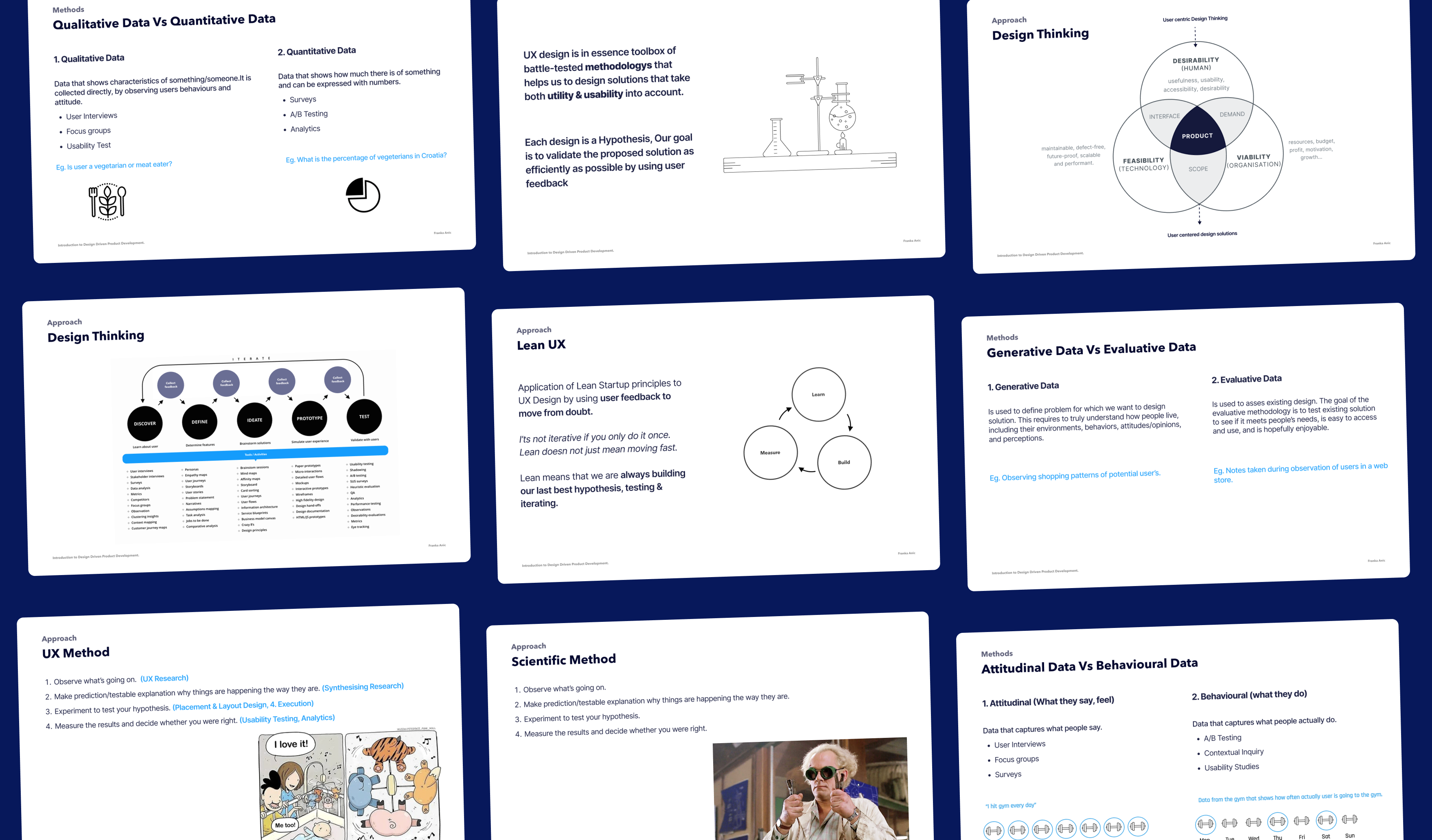
Purpose: Stakeholder education and UX process alignment
Format: Internal presentationYear: 2022
- Structure UX knowledge into a clear and teachable format.
- Explain UX fundamentals and methods to non-design stakeholders
- Introduce a shared UX workflow.
Support buy-in for the team.
- UX methods covered: User research, synthesis, usability testing, workflows, validation methods.
- Collaboration: Presentation, stakeholder discussion, follow-ups.


Challenge
UX was present in the organisation, but expectations varied across teams
Some stakeholders associated UX with interface design only, while research and testing were inconsistently understood or planned. UX was often introduced late in the process, making it harder to influence product decisions.
The challenge was to explain UX in a way that:
- was understandable to non-design roles
- showed structure instead of opinion
- helped teams see when and why UX activities matter
Business Goals and Organisational Context
The organisation needed a clearer way to integrate UX into product development.
This meant:
- having a shared language for UX discussions
- making research and testing easier to plan
- setting realistic expectations around UX involvement
- reducing friction between design, product, and engineering
The UX syllabus provided a common reference point that teams could use when planning and discussing product work.
Results
The presentation helped establish a shared understanding of UX across product teams and stakeholders.
After introducing the UX syllabus:
- UX discussions became more specific and less abstract
- Stakeholders had clearer expectations of when and why UX activities were needed
- UX was involved earlier in product conversations
- Research and testing were easier to explain and plan
- UX no longer had to be reintroduced from scratch in every project
Most importantly, UX work shifted from being interpreted individually to being discussed through a shared process and language.
This created a foundation for implementing UX practices more consistently, without relying on constant explanation or persuasion.
Learnings and plans for future.
Without regular communicaton and feedback on weekly basics, and with some other team members almost on daily basics, we wouldn’t have same results for sure. We could easily hit wrong direction and have large amount of work and resources wasted.
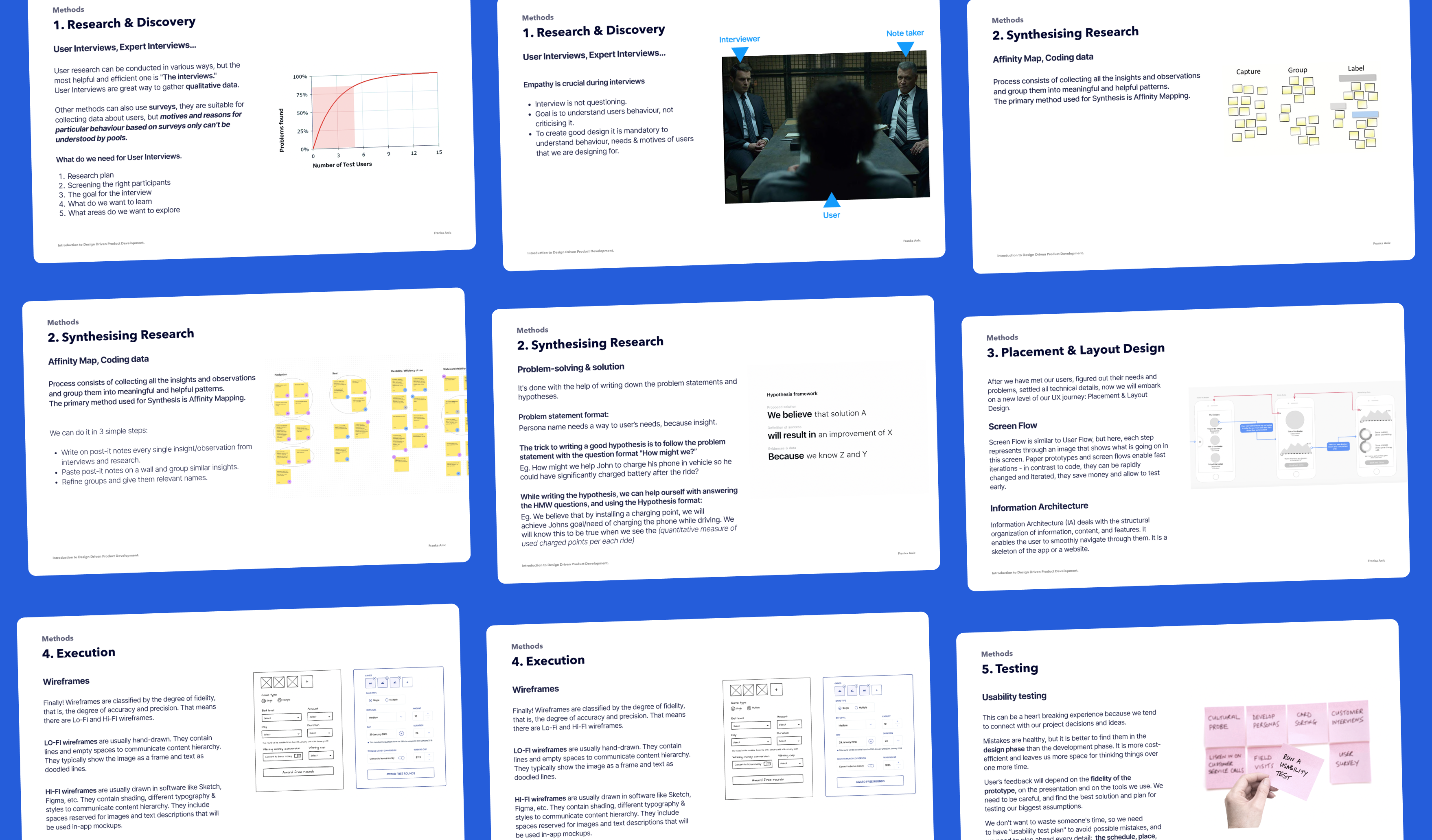
Part of internal UX presentation materials:
Final Thoughts
- This effort confirmed that introducing UX into an organisation is as much about alignment as it is about design work.
Before teams can work effectively with UX methods, they need a shared understanding of what UX is responsible for and how it supports product decisions. Without that foundation, even good design work struggles to have impact. - By treating this as an enablement effort rather than a delivery project, I was able to focus on clarity, expectations, and shared language. That work made later UX involvement more effective and reduced friction across teams.
This experience shaped how I approach UX in organisations: align first, then design.

"Franka is like a unicorn among designers: she is a blend of an analytic and systematic mind of an engineer and a deep, yet subtle design expression of a true artist - a rare find among designers and UX specialists. She approached our project with an open and curious mind, always asking questions to understand the project even beyond the scope of her task. Never misses a deadline and delivers flawless work that exceeds all expectations."
Head of Digital at Klett Profil & Izzi


